News
News Center
 English▼
English
English▼
English
 中文
中文
 Русский
 Deutsch
 Français
 Italiano
 Español
 ไทย
ไทย
 Indonesia
 Tiếng Việt
 日本語
日本語
 한국어
한국어
 English▼
English
中文
Русский
Deutsch
Français
Italiano
Español
ไทย
Indonesia
Tiếng Việt
日本語
한국어
English▼
English
中文
Русский
Deutsch
Français
Italiano
Español
ไทย
Indonesia
Tiếng Việt
日本語
한국어

Conveyor Belt As the lifeblood of bulk material transportation systems, the choice of materials directly affects the stability and operational safety of the production line. From ordinary nylon (NN) Conveyor Belt, polyester (EP) Conveyor Belt to high-strength Steel Cord Conveyor Belt, different core materials determine Conveyor Belt tensile strength, elongation, and grooving capability.
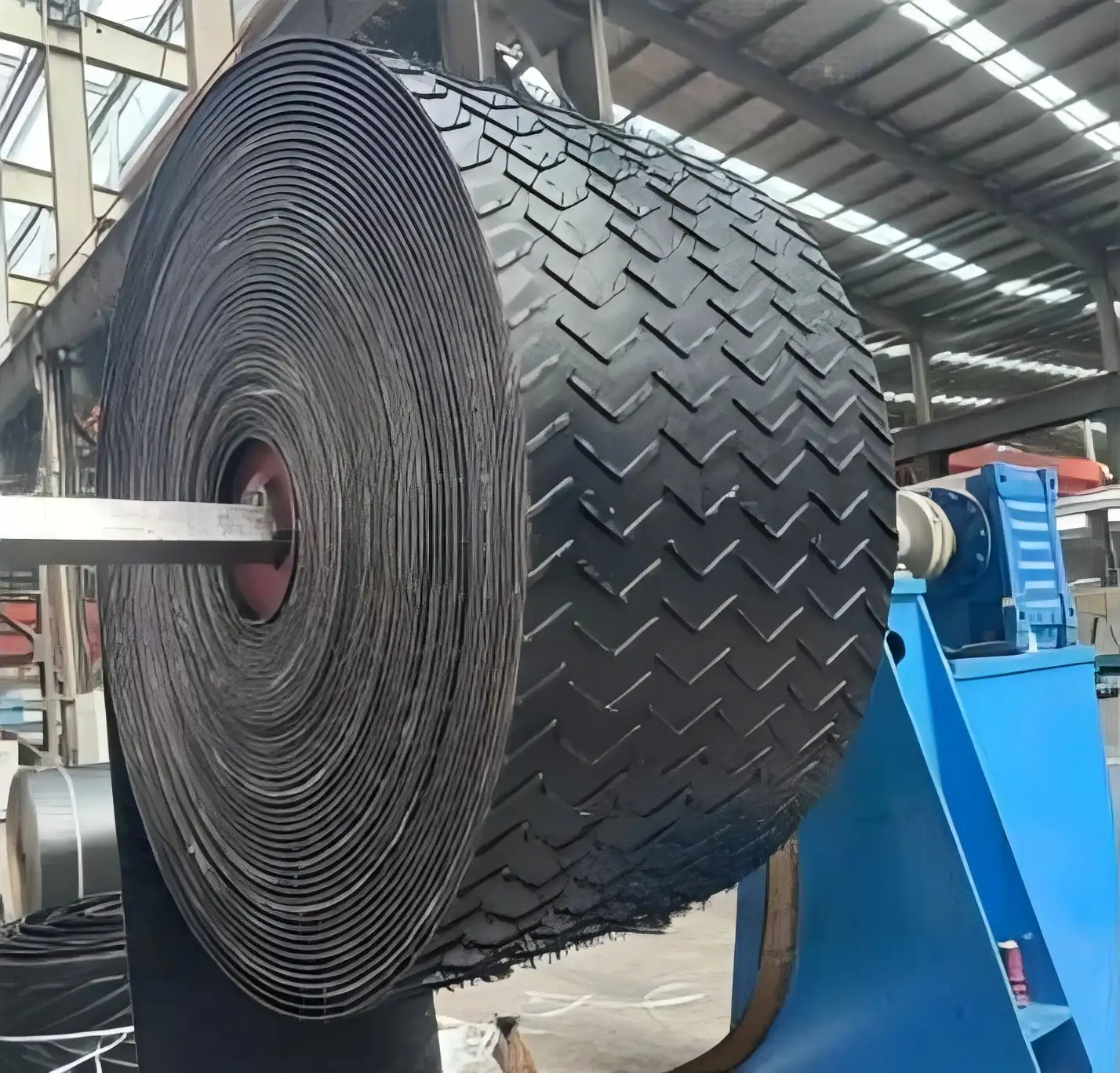
人字型输送带
In modern Conveyor systems characterized by long distances, high capacity, and high belt speeds, [[G22] is the preferred choice due to its extremely low elongation and outstanding tensile strength. However, this also places higher demands on the joint vulcanization process. The joint strength usually only reaches 80%-90% of the belt body's strength, which is the weak link in the entire system.
In addition, the formula of the covering adhesive is equally crucial. Depending on the material properties (such as wear resistance, high temperature resistance, acid and alkali resistance, flame retardancy, etc.), it is necessary to select the appropriate special rubber. For example, underground coal mines must use flame-retardant and anti-static properties Conveyor Belt, while in the metallurgical industry Conveyor high-temperature sintered ore, special high-temperature resistant covering adhesives are needed.
Xinanneng not only provides high-quality Conveyor machines Accessories, but is also committed to providing customers with professional consulting services from Conveyor Belt model selection, tension calculation to overall system optimization, ensuring the healthy and smooth flow of the "main arteries."